
A dinner party at home does not need a theme, a seating chart, or three days of preparation. It needs a plan loose enough that you can sit at the table instead of hovering by the stove. Most hosting anxiety comes from decisions made too late: the guest list that quietly grew by three, the dish that can only be cooked in the final ten minutes, the friend who doesn't eat dairy and mentions it as you're plating.
What follows is the checklist worth running through in the days before a casual dinner, so the evening itself mostly takes care of itself.
1. Settle the guest count before you plan anything else
Everything downstream — how much you cook, whether you need to borrow chairs, whether the table has to become a buffet — depends on this number. Be a little ruthless about it. Six to eight people fits a normal dining table, one oven, and one large pot. Ten is a different kind of evening: you'll want to serve from the kitchen counter rather than pass plates, and you'll need more than one serving spoon.
Invite slightly fewer people than you think you can handle, not more. A dinner where everyone has elbow room beats a packed room where nobody can reach the bread. And resist adding a couple "just to balance the numbers" — an odd number of guests at a round table is rarely a problem, but two strangers with nothing in common seated next to each other can flatten a whole end of the table.
2. Build a menu you can mostly make ahead
The single most useful rule: no more than one dish should need your attention in the last half hour. Choose food that improves with time — braises, bean stews, baked pasta, roasted vegetables served at room temperature, a grain salad that has been sitting in dressing for an hour. These don't just save you work; they taste better than the version rushed at the last minute.
A workable structure looks like this:
- One thing from the oven that goes in before guests arrive and comes out with minimal fuss — chicken thighs on a tray with lemon and potatoes, a gratin, a tray of roasted squash.
- One thing served cold or at room temperature — a salad of white beans and herbs, sliced tomatoes, a bowl of olives, good bread.
- One thing that only needs assembling — cheese, fruit, something bought from a bakery you trust.
Avoid anything fried, anything delicate enough to be ruined by five extra minutes, and anything that has to be seared in batches while people are arriving. Those dishes are for a Tuesday night when nobody is watching.
Cook for the leftovers you actually want
Slightly overshoot. A pot of stew that leaves enough for tomorrow's lunch is a much better outcome than a table scraped clean and a host still hungry at eleven. It also removes the quiet panic of counting portions as plates go by.
3. Ask about dietary needs early, and once
Include the question in the invitation, phrased simply: "Anything you don't eat? I'm planning the menu this week." That's all it takes. People are used to the question and generally appreciate not having to bring it up at the table.
Then make sure at least one substantial dish — not just the salad — is free of meat, and that a second dish works for anyone avoiding dairy or gluten, if those are the restrictions you've been told about. You don't need to build a separate meal for each person. You need one menu where everyone can fill a plate.
If you're serving from a buffet, a small handwritten label on two or three dishes saves a lot of explaining: contains nuts, vegan, very spicy. For serious allergies, keep the packaging and be straightforward about what went into each dish. If someone's allergy is severe, have an honest conversation beforehand about whether your kitchen can safely handle it — that's a judgement only the person with the allergy and their doctor can make. Better to know early than to guess badly at the table.
4. Set the table so people serve themselves
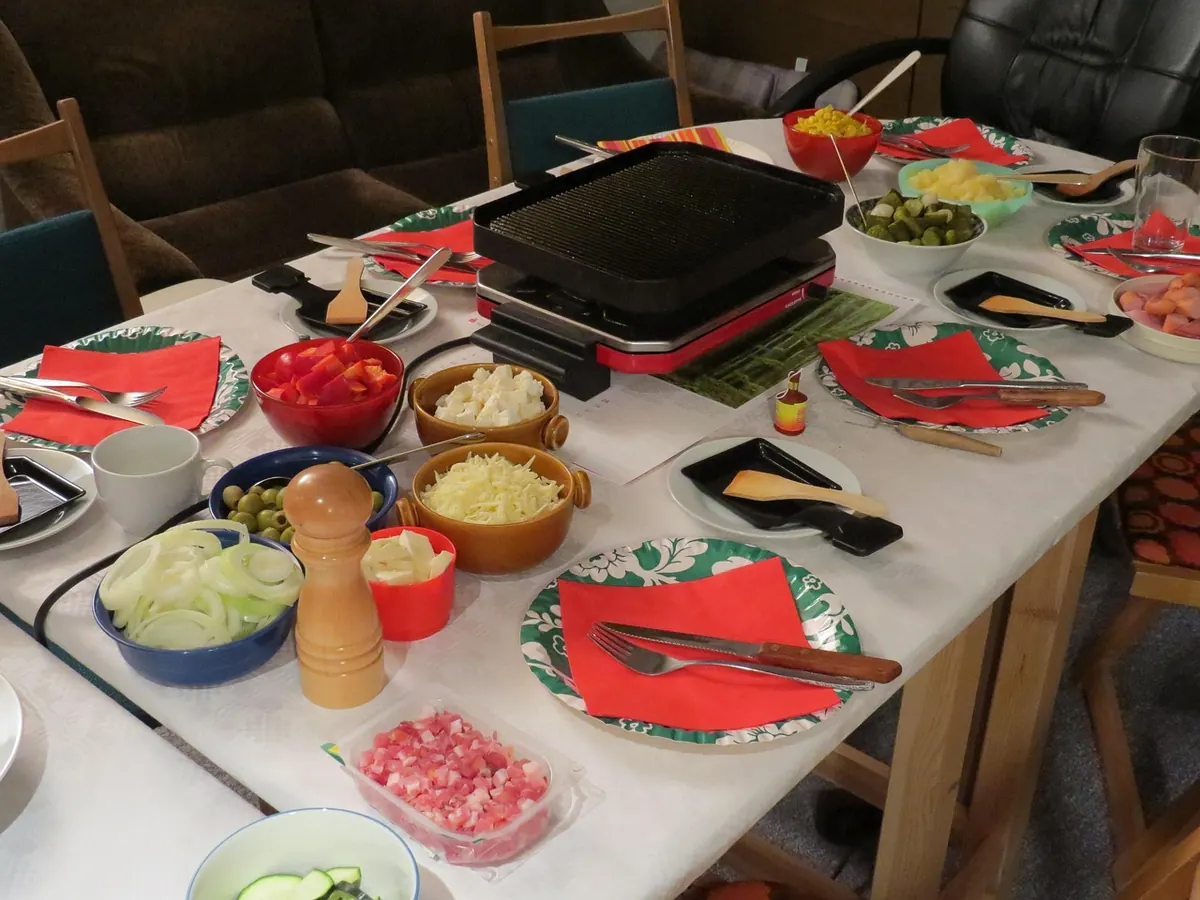
Family-style serving, with the food in bowls in the middle of the table, keeps you seated. Plated food looks lovely and photographs well, but it turns you into a waiter for the evening and makes second helpings awkward for everyone.
Put everything people will reach for within arm's reach of somebody: water, salt, bread, napkins, an extra bottle. Nothing kills a good conversation faster than the host getting up four times to fetch things. A pitcher beats bottles for water, and candles set below eye level keep faces lit without glare.
Two small things worth doing in advance: clear a spot near the door for coats and bags, and find your extra chairs the day before rather than the hour before. Fewer objects on the table is always the right call — you want room for the food, not a centrepiece competing with it.
5. Work the timing backwards
Pick the serving time, then count backwards. Something like this, for a dinner at eight:
- Two days before: shop, and make the dish that improves overnight — a braise, a stew, a dressing.
- Morning of: set the table, chill the drinks, wash and cut vegetables, clear the fridge of anything you don't need.
- One hour before: oven on, main dish in, dishes you're serving cold plated and covered.
- Twenty minutes before: music on, water poured, bottles opened, apron off.
- When guests arrive: nothing on the stove that needs stirring.
That last point matters more than the rest. You want a gap before people walk in — even ten minutes — where there is genuinely nothing to do but open the door.
If you're in the kitchen for most of the meal, the menu was too ambitious, not the evening.
6. Keep the drinks simple and generous
One thing to mix, or one bottle of something good, plus wine, plus plenty of cold water. Add a non-alcoholic option that isn't an afterthought — a jug of iced tea, bitter lemon, sparkling water with something in it. Not everyone drinks, and nobody should have to explain why. Buy more ice than you think you need, and open the first bottle before the doorbell rings.
The last thirty minutes, and the point of all this
In the final stretch, do the boring things: take out the rubbish, wipe the counters, stack the pans you won't need in the sink and hide them, change your shirt. Put on music you like at a volume that lets people talk. Then sit down.
A good dinner party is not a performance. Guests remember whether the evening felt easy, whether they got a proper second helping, and whether the host seemed glad to be there. Every item on this list exists to protect that one outcome — you, at your own table, with a full plate and nowhere else to be.
Photo: Hans / Pixabay