
There is something quietly wonderful about a local festival. The streets are closed to traffic, someone is frying something that smells incredible, and a brass band you have never heard of is playing slightly too loud near the church steps. Then you arrive twenty minutes late, discover the tickets sold out online three days ago, and end up eating a lukewarm sandwich in a crowd that keeps shushing you. None of these are disasters, but they are avoidable.
Most first-time visitors make the same handful of mistakes, and almost all of them come from treating a local festival like a city break or a concert. It is neither. It is a village or neighbourhood celebration that usually began long before you arrived and will carry on long after you leave, and the people running it are often volunteers who have been preparing for months. Adjust a few habits and you will enjoy it more, and you will be a much better guest.
Arriving late and missing the point of the day
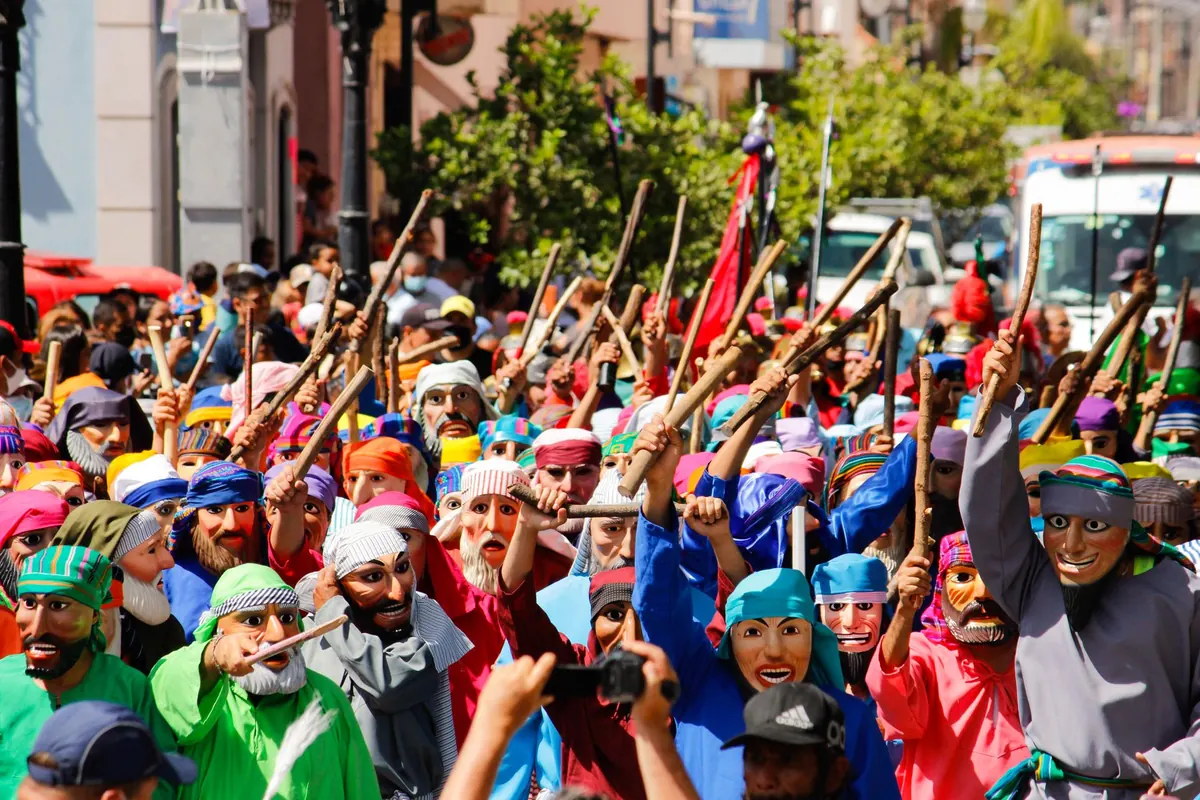
Local festivals rarely have a featured act at 9 p.m. that the whole day builds toward. They tend to have a rhythm: an opening Mass or blessing, a procession, a market opening at a certain hour, a competition, lunch, then the evening. The key events frequently happen early and modestly, and they are the most interesting part. A parade of forty people in traditional dress is not a spectacle; it is a short window into how a place sees itself.
Check the programme the night before and mark the items you genuinely want. Arrive with a buffer of at least thirty minutes for anything involving a procession or a ceremony, because street closures and spontaneous delays are normal. If you can only go for the evening, go anyway, but be aware you are seeing the social part of the festival rather than the ceremonial part, and set expectations accordingly.
A better way to plan the day
- Find the official programme, usually a poster at the town hall, the festival's social page, or the parish notice board. Photograph it.
- Identify one or two fixed moments you do not want to miss, and build the rest of the day around those.
- Arrive early, walk the whole site, and find the exits, toilets and quieter corners before the crowds arrive.
- Leave a gap in the middle of the day. Festivals are tiring, and the evening is often the best part.
Assuming you can buy tickets at the gate
Small festivals increasingly sell tickets or pre-booked meal vouchers online, especially the ticketed dinner or evening entertainment. Some are cash-only on the gate, others are card-only, and a few have both but different queues. Turning up without checking is the mistake. So is assuming that because it is a "local" event it must be informal, cheap or free.
Before the day, check three things: whether entry needs a ticket, whether food and drink are paid in cash or with pre-purchased tokens, and whether the seated dinner requires booking. Bring a modest amount of cash regardless. Small stalls often run out of change, and card networks sometimes drop in a crowded square. If money is tight, decide your budget before you go, and do not feel obliged to buy at every stall — nobody notices, and nobody is counting.
Not every event that happens in a town square belongs to the festival. Some stalls, raffles and collections are run by other groups, and some are not especially well regulated. If something feels off, simply walk on.
Treating a festival like a photo shoot
Photography is where otherwise polite visitors lose their manners. The common mistakes are predictable: stepping into the middle of a procession, blocking the path of participants, holding a phone above your head during a religious ceremony, or asking a child in costume to stop and pose while their group moves on.
Use some basic judgement. If people are processing, stand at the edge and let them pass. Do not photograph an altar or a shrine during a moment of prayer; wait until it is over, and if in doubt, ask. Ask parents before photographing children, and accept a no without comment. If you are inside a church, put the phone away entirely unless the event is clearly a performance. A few good pictures taken respectfully are worth more than a hundred taken at arm's length in someone's way.
Ignoring local etiquette and dress
You do not need to dress like the locals, but you should read the room. A Festival of the Madonna is not the same as a street food fair, and a T-shirt with a joke on it may land badly at a religious ceremony. Crowd behaviour in Italy and in most of Europe is also more forgiving than visitors expect, with one exception: the entrance area to a church, a shrine or a civic ceremony.
Small habits that go a long way
- Cover shoulders and remove hats inside religious buildings, and stay silent during prayers.
- Ask before joining a table that looks like a family or members' group; some long tables are booked in advance.
- Say permesso or excuse me when you need to pass through a crowd, and keep an eye on the people behind you.
- Do not move chairs, tables or equipment without asking. Even a stray plastic chair usually has an owner.
- Greet the person at the till and say goodbye when you leave. It is a small thing that is noticed.
- Do not touch the food with your hands at a shared stall, and do not help yourself to anything that looks unstaffed.
- Keep dogs away from the food area and from crowded processions unless the site clearly welcomes them.
- Put your rubbish in the bins provided, or in your bag until you find one. Many small towns clean up themselves the next morning.
Handling the crowd badly
Festivals compress a lot of people into narrow old streets, and almost every unpleasant moment comes from a small decision made quickly. Stopping dead in the middle of a moving crowd to check a phone is the classic. So is pushing toward the front of a procession, or setting up a picnic blanket in a fire lane.
Move to the side before stopping. Keep your group together by agreeing on a meeting point at a fixed time and place rather than by shouting across the square. If you have small children, write your phone number on their wrist or hand, and dress them in something you can spot at a distance. Bring water, keep an eye on older relatives in the heat, and do not try to cross a moving procession. Wait, it will pass.
If something goes wrong, find the people with radios — usually volunteers in matching jackets, marshals, or staff at the nearest info point. They know where the first aid tent is and how to get out of a packed street. Where the event involves alcohol, heat, stairs or physical activity, look after yourself sensibly and seek local medical help rather than pushing through. This is general guidance, not medical advice; if you have a condition that could be affected, speak to your doctor before travelling.
Missing the part that matters most
Visitors often spend the whole evening in the busiest square, buying things, without ever drifting into the quieter lane behind it, where a group of older people are setting up tables or the band is rehearsing behind a door. The most memorable part of a local festival is usually the back of the room, not the front.
Talk to someone who has lived in the town longer than you. Ask what the festival is actually celebrating, why it falls on this date, and what it was like twenty years ago. Buy something from the parish stall, put something in the collection if you are attending, and be a guest rather than a consumer. Then leave on a high note.
A short checklist for going respectfully
Before you go: find the programme, check ticket and cash requirements, read up on what the festival is for, and know how you are getting home after the last event. On the day: arrive earlier than you think you need to, stand to the side, keep your camera down at ceremonies, spend modestly, and leave the streets as clean as you found them. When in doubt, watch the locals for thirty seconds and copy them. That one habit prevents most of the mistakes on this list.
Photo: Rogelio Villanueva / Pexels