
You can move into a bright apartment on a handsome street and still feel like a guest three years later. Or you can live above a bakery, in a plain building with thin windows, and find that six people within a hundred meters know your name. The difference isn't the architecture, though good design helps. It's a set of small, repeatable habits that most of us never think to plan — and that you can start this week.
Belonging Is Built From Repetition
A neighborhood starts to feel like yours when it becomes familiar, and familiarity is mostly arithmetic: the same route, the same hour, the same faces. Nothing dramatic. The person at the bar who starts pouring before you order. The man with the slow greyhound. The woman who waters her plants at seven, always in the same cardigan. The crossing guard who waves at cars even when nobody's crossing.
That sense of recognition takes far longer than a weekend of enthusiastic neighborliness. You can't host one impressive dinner party and expect it to replace three months of being a familiar sight. The good news is that you don't need to be outgoing to build it. You only need to be predictable in a pleasant way. Choose the same café, the same loop, the same bakery. Let people see you often enough that they're no longer surprised by you.
Walkability Does More Than Save Petrol
We tend to talk about walkable neighborhoods in terms of planning scores and car use, but the everyday effect is simpler: when you're on foot, you bump into people. You see the same dog, the same cyclist, the same man carrying his ladder to the shop on Tuesdays. In a car, the street is scenery. On foot, it's a social space.
The practical measure is not whether your neighborhood has a perfect score — most don't. It's whether you have at least one short route worth repeating. Ten minutes, roughly. A loop that passes a shop, a bench, a park gate, a patch of shade. If the best loop is three streets away, fine: walk to it. If the local café is a two-minute drive, park at the far end of the street instead and cover the last stretch on foot.
Comfort matters as much as distance. A street without shade, benches, or decent lighting at night won't be used, however close it is. Test your loop at different hours before you commit to it.
Third Places: The Rooms Between Home and Work
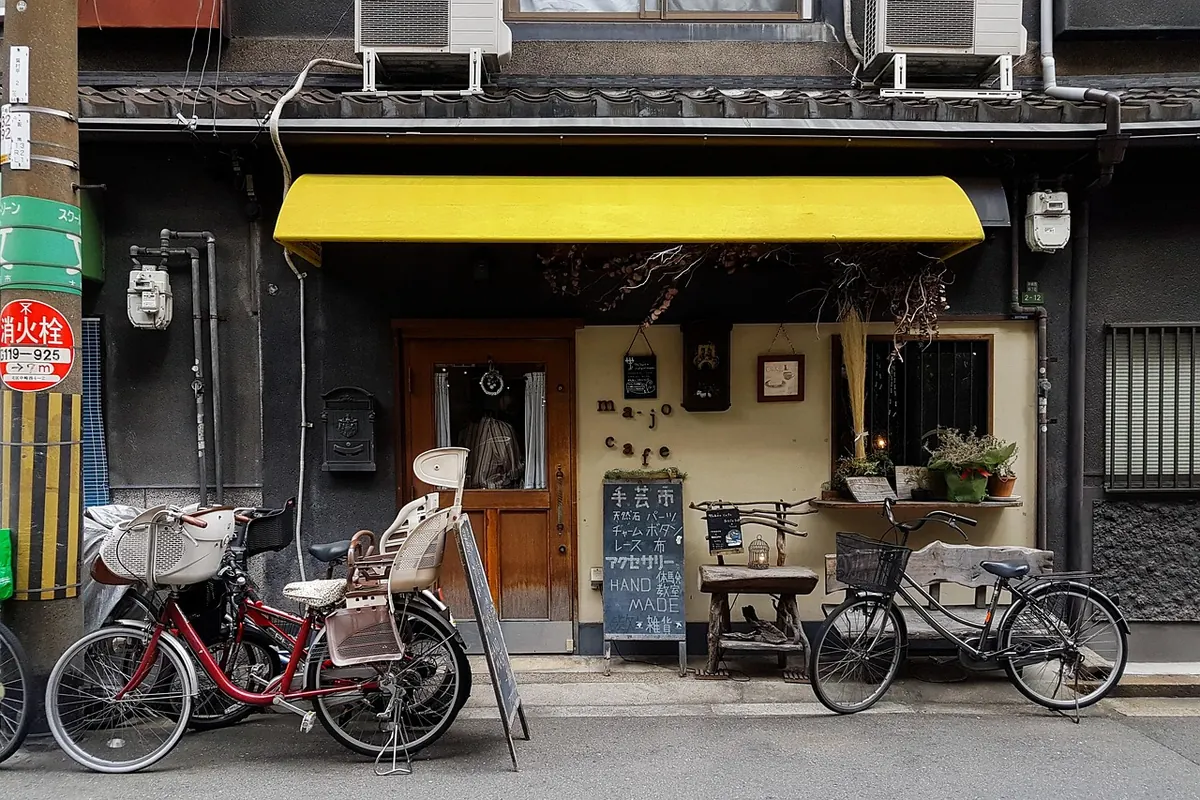
Sociologists have a term for the places that are neither home nor work and where you go without an appointment: third places. The café with three tables. The library. The public pool. The barber's. The dog park. The hardware store where the owner remembers your kitchen project. The church hall, the community garden, the corner bar with the broken jukebox.
What makes one work isn't décor or coffee quality. It's that you can stay a little too long without spending much, that there are regulars, and that somebody behind the counter knows your face. The time slot matters more than the venue. A mediocre café you visit every Saturday morning at ten will do more for you than an excellent one you visit twice a year.
Most places become third places by accident. You can also nudge one along:
- Go at the same hour each week, and go on a quiet day rather than the busy one.
- Order the same thing until it's your order.
- Sit where you're visible — at the counter or a window table, not tucked into the back corner.
- Learn one name a week. Staff first, then regulars.
- Stay twenty minutes longer than you strictly need to. Nothing social happens in a five-minute stop.
Routines Are the Thread
If you remember nothing else: routines make you findable. Predictability is what turns a stranger into a person others can talk to. The morning coffee walk. The evening loop after dinner. The Saturday market run. The bins out at eight on a Tuesday, which is how half of the useful conversations on my street have started.
Keep the routine small enough that you can't fail it
Ambitious routines break in the rain. Make yours short enough to do on a bad day and add a grey-weather version. Twice around the block counts. A walk to the corner and back counts. What you're protecting is not exercise or productivity — it's the chance of running into someone.
You rarely end up close to the neighbor who knocked on your door on day one. You end up close to the one you've passed a hundred times.
Neighbors: From Nodding to Knowing
Acquaintance happens in stages, and each stage has a low-cost move. Acknowledgment is a nod or a wave. Recognition is a "morning" and a name. Small talk is a remark about the weather, the bins, the scaffolding that's been up since spring. Reciprocity is a borrowed ladder, a watered plant, a cat fed while someone's away.
There's no shortcut past the early stages, but there are cheap ways to speed them up:
- Learn three names a month. Not twenty. Three. Write them in your phone if you need to.
- Use the name out loud the next time you see them. That's what makes it stick.
- Ask for one small favor. People like being useful, and a request signals trust — keep it genuinely small, like a screwdriver or a spare egg.
- Offer things. Surplus tomatoes, a parcel taken in, a hand with a heavy bag.
- Follow up. "How was the interview?" two weeks later is worth more than any first conversation.
Shared walls deserve extra care. A note before a party, a quiet hour respected, a quick apology for the drill on Sunday morning — small courtesies buy large goodwill, and goodwill is what lets you ask for help later without it feeling strange. Knowing your neighbors isn't the same as being in each other's business. Leave people an easy exit from a conversation, and respect the ones who'd rather keep to themselves.
What Quietly Gets in the Way
Car-first habits, headphones, delivery apps, garage doors that close behind the bumper, and moving every two years all reduce the number of small, accidental encounters that build a street. None of these are moral failures; they're just friction.
You don't have to upend your life to reduce it. Take one earbud out when you walk the loop. Choose the stairs instead of the lift. Sit on the stoop or balcony instead of inside with the blinds down. Do the bins when the light is good. Washing the car, sweeping the pavement, repotting a plant outside your door — anything that puts you in view of the street and gives a passerby something to say.
A Four-Week Start
Week one: pick one loop, ten minutes, and walk it daily. Notice three landmarks and the people who appear on it.
Week two: choose one third place within walking distance and go three times at the same hour. Same order. Stay a little longer than you need.
Week three: learn three names — the person behind the counter, whoever you keep passing, and one neighbor on your floor or street.
Week four: do one small unsolicited kindness and ask for one small thing in return. Then repeat weeks one to four for a year.
That last part matters. This takes months, not a weekend, and it will feel one-sided for a while. Keep going anyway. The payoff isn't a busy social calendar. It's a Tuesday when things have gone badly, and on the way home someone across the street raises a hand and says your name, and the day gets slightly lighter.
Photo: Artikhun / Pixabay